Signs parents notice
- People outside the family often can’t understand your child
- Sounds are missing or swapped (“tat” for “cat”)
- A lisp, or sounds that stay unclear well past the age most children master them
- The same word said differently each time, or more errors on longer words
- Frustration when others don’t understand
What we work on
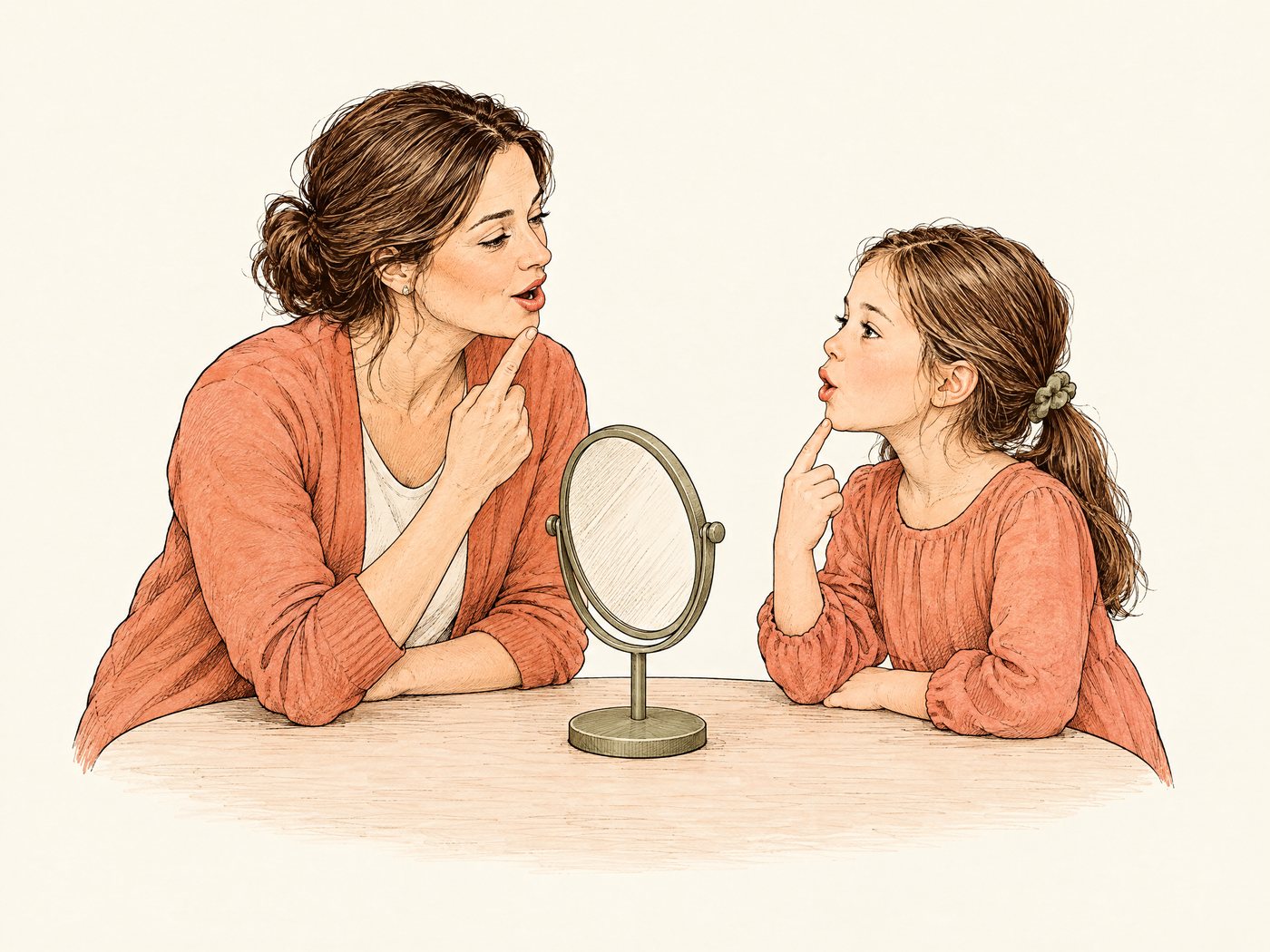
We work on the sounds your child has trouble making, such as “r,” “s,” “l,” “sh” or “th,” and on sounds that are left out or swapped for others. Therapy starts with hearing and making the sound correctly, then builds from single sounds to words, sentences and everyday conversation, with short practice at home.
Some children have weak or poorly controlled speech muscles (dysarthria), which can follow cerebral palsy, a brain injury or another neurological condition. Speech may sound slurred, quiet or strained. Therapy builds control and breath support and gives other ways to be understood while speech develops.
Childhood apraxia of speech
A speech delay follows the usual sequence of sound development, only more slowly. Apraxia is a problem with movement planning, so signs include:
- Little babbling as a baby, and first words that came late
- The same word said differently each time
- More errors on longer words and sentences
- Visible searching with the mouth before a word
Therapy uses frequent, structured practice of speech movements with cues that are gradually faded.
When to get an evaluation
Children develop sounds at different speeds, and some, like “r,” come later. Consider an evaluation if strangers have trouble understanding your child by around age 3 to 4, if their speech is unclear for their age, or if it is affecting how they feel about talking.